
ACNE SCARRING TREATMENT
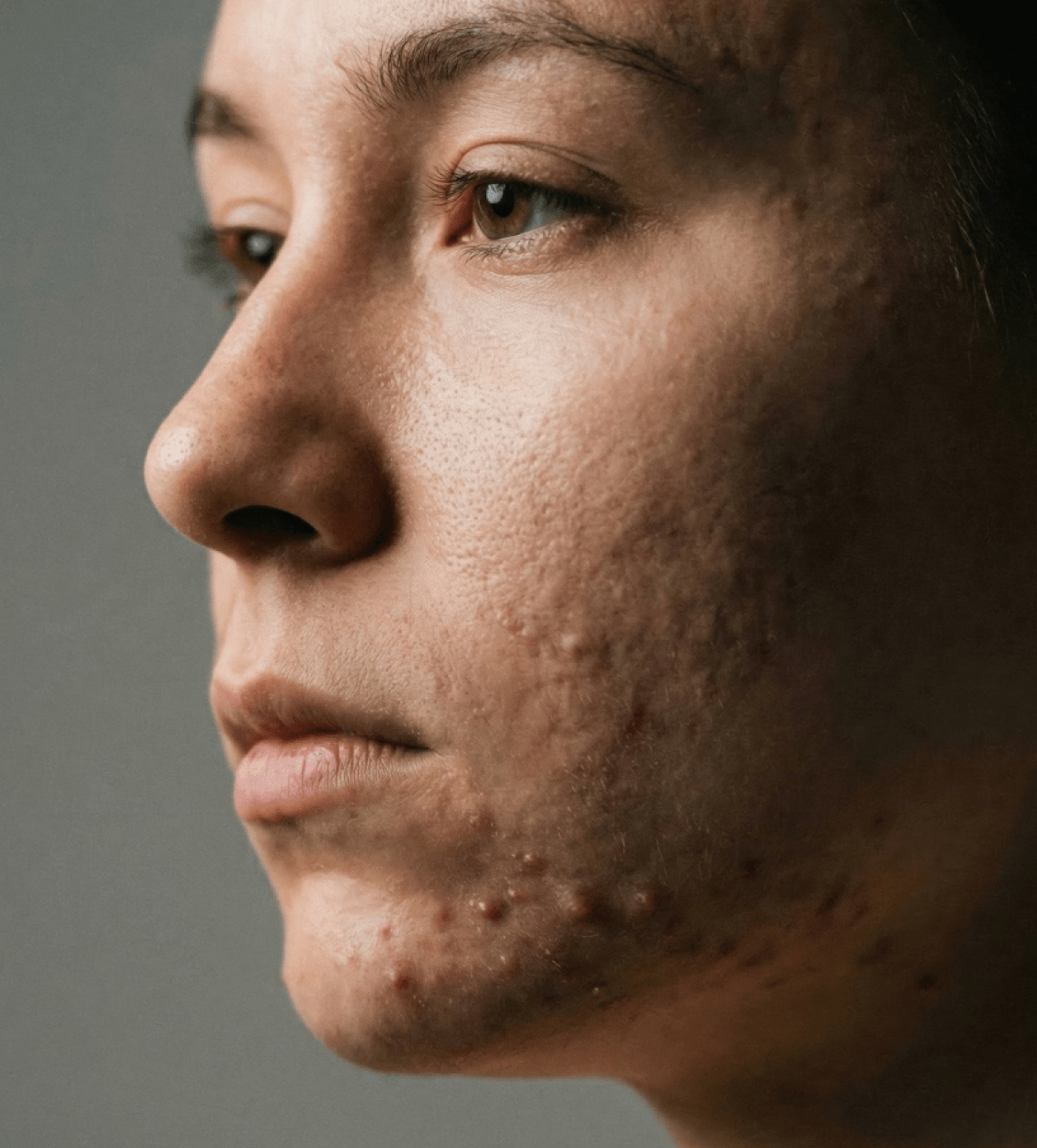
Acne scars are lasting changes in skin texture that can develop when inflammation affects the deeper layers of the skin. They may appear as small depressions, broader uneven areas or, less commonly, raised tissue. Unlike active breakouts, established scars often require treatments directed at the skin’s structure rather than acne medication alone.
Dr. Camellia Kamyab approaches acne scarring by examining scar type, skin condition and the patient’s history of breakouts. The aim is to develop a measured plan that improves texture where possible without compromising the surrounding skin.
THE MARKS LEFT AFTER INFLAMMATION
Inflammatory acne can disrupt the collagen that supports normal skin structure. As the area heals, insufficient collagen may leave a depression, while excessive scar tissue can create a raised mark.
Not every mark left by acne is a true scar. Redness and brown pigmentation may persist after a spot resolves, yet these colour changes differ from permanent alterations in texture. Identifying the difference helps avoid choosing a resurfacing procedure for a concern better addressed through pigment-focused care.
A SCAR'S SHAPE OFFERS THE FIRST CLUE
Acne scarring is not a single pattern. Several scar types can appear together, even within a small area of the face. During consultation, Dr. Camellia may distinguish between:
- Ice-pick scars: narrow, deep openings extending into the skin
- Boxcar scars: round or angular depressions with defined edges
- Rolling scars: broad, wave-like depressions often linked to underlying tissue attachments
- Raised scars: thickened tissue above the surrounding skin
- Post-acne marks: red or pigmented areas without a change in contour
These distinctions matter because treatments that help one pattern may have limited effect on another.
CLEAR ACTIVE ACNE BEFORE ADDRESSING OLD SCARS
Continuing breakouts can create new scars while older ones are being treated. For many patients, controlling active inflammation is therefore an important early priority.
Dr. Camellia considers the frequency of new lesions, current skincare and previous acne treatments before introducing procedures aimed at texture. Skin barrier irritation may also need attention. A stable, well-managed starting point can make the treatment sequence more appropriate and reduce avoidable complications.
MATCHING THE METHOD TO THE TISSUE CHANGE
Different techniques act at different depths. Microneedling and selected fractional laser treatments may encourage collagen remodelling, while subcision may be considered for rolling scars tethered beneath the skin. Other specialised approaches may suit selected deep or raised scars.
No single method is best for every patient, and some techniques require referral to an appropriately qualified specialist. Suitability depends on scar anatomy, skin tone, evidence for the proposed procedure and the balance between potential improvement and risk.
FACTORS THAT MAKE TREATMENT MORE INDIVIDUAL
The assessment looks beyond the visible scars. Skin characteristics and previous experiences can affect both treatment selection and recovery. Considerations may include:
- Whether active acne is still present
- Scar depth, distribution and age
- Natural skin tone and risk of post-inflammatory pigmentation
- History of keloid or abnormal scarring
- Current medications and recent procedures
- Skin sensitivity and healing tendencies
- Willingness to allow for recovery and repeat sessions
These details help shape a realistic strategy rather than a standard resurfacing package.
Book a ConsultationMORE INTENSITY DOES NOT MEAN A BETTER RESULT
Treating several scar types may require more than one method, but procedures should be introduced with clear priorities and adequate healing time. Aggressive resurfacing can increase irritation or pigmentation problems, particularly in susceptible skin.
Dr. Camellia favours treatment decisions based on the specific indication. Sometimes improving a limited number of deeper scars first is more appropriate than trying to treat the entire face at once.
THE SKIN CONTINUES CHANGING AFTER THE SESSION
Recovery depends on the technique. Temporary redness, swelling, sensitivity, peeling or bruising may occur, while deeper treatments can require more downtime and carry risks of infection, pigmentation changes or additional scarring. Collagen remodelling develops over weeks to months, so early appearance is not necessarily the final outcome. Aftercare, including appropriate sun protection and avoiding irritation, is an important part of the process.
TEXTURE GAINS WITHOUT A PROMISE OF PERFECTION
Acne scar treatment can reduce the visibility of selected scars, but it rarely restores completely unmarked skin. Improvements vary with scar type, severity and individual healing response, and multiple sessions may be needed. Patients considering acne scarring treatment in Dubai can arrange a consultation with Dr. Camellia Kamyab to discuss scar patterns, previous acne, treatment options and likely recovery. The goal is thoughtful improvement in skin texture while preserving skin health and natural appearance.
SOCIAL WALL
 @drcamelliakamyab


YOUR JOURNEY STARTS WITH AN ASSESSMENT
Every treatment plan begins with understanding you.