
Hair Loss Consultation
Hair loss can develop gradually or appear unexpectedly, affecting hair density, scalp coverage and overall confidence. While some shedding is part of the normal hair growth cycle, persistent thinning, excessive shedding or noticeable changes in hair distribution may indicate an underlying concern that deserves medical attention.
Dr. Camellia Kamyab approaches hair loss consultation through careful evaluation of the hair, scalp and relevant health factors. The objective is to understand the possible causes of hair changes before considering treatments, helping patients make informed decisions about their hair health.
Every Hair Loss Pattern Tells a
Different Story
Hair loss does not affect everyone in the same way. Some individuals experience gradual thinning around the temples or crown, while others notice widespread shedding, a widening parting or isolated areas of reduced hair density. These patterns can provide important clinical information.
Hereditary influences, hormonal changes, medical conditions, nutritional deficiencies and temporary disruptions to the hair growth cycle may contribute to different forms of hair loss. Identifying the pattern helps guide further assessment and avoids selecting treatments before the underlying concern is understood.
The Changes Worth Discussing
A hair loss consultation provides an opportunity to examine changes that may have developed over weeks, months or several years. Even subtle differences can help establish the nature and progression of the concern. Patients may seek an assessment for:
- Excessive daily hair shedding
- Gradual thinning across the scalp
- A widening hair parting
- Receding hairline or temple changes
- Reduced hair density or volume
- Patchy areas of hair loss
- Increased hair breakage
- Scalp irritation, redness or discomfort
Not every symptom indicates permanent hair loss. Some changes may be temporary, while others require further investigation or specialist management.
Hair Follicles Follow Their Own Biological Rhythm
Hair grows through a cycle involving growth, transition, resting and shedding phases. Disruption to this cycle can cause more hairs than usual to enter the shedding stage, sometimes several months after a triggering event.
Changes in health, significant stress, certain medications or nutritional problems may influence this process. However, shedding alone does not establish a diagnosis.
Dr. Camellia considers the timing, duration and distribution of hair loss to help distinguish potential causes and determine whether additional investigations are appropriate.
The Scalp Offers Important Clinical Clues
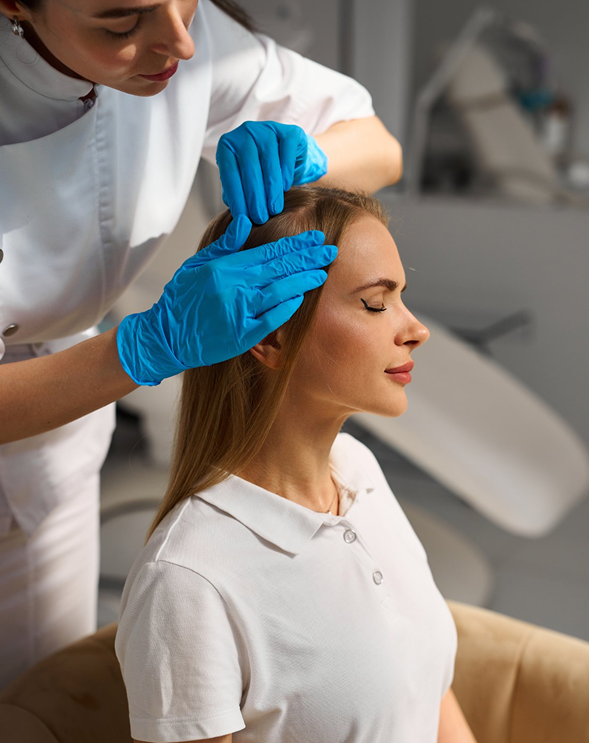
Healthy hair growth depends partly on the condition of the scalp and hair follicles. Inflammation, scaling, irritation or certain scalp disorders may contribute to changes in hair growth or shedding.
Assessment may include examining scalp condition, hair density, distribution and signs of breakage. Where necessary, a closer examination or referral to a relevant specialist may be recommended.
The purpose is to identify whether the concern originates primarily from the hair follicle, scalp environment or another contributing medical factor.
Investigating the Factors Behind Thinning
Hair loss can be influenced by several overlapping factors. A consultation may therefore include a review of medical history, lifestyle, previous treatments and relevant symptoms before deciding whether diagnostic testing is necessary. Factors considered may include:
- Family history of hair loss
- Recent illness or significant stress
- Hormonal changes or relevant symptoms
- Nutritional habits and possible deficiencies
- Existing medical conditions
- Current medications and supplements
- Previous hair restoration treatments
- Haircare practices and scalp health
Selected blood tests or additional investigations may be recommended when clinically indicated. Extensive testing is not necessary for every patient.
A Diagnosis Should Guide the Treatment Conversation
Hair restoration treatments have different purposes, and their suitability depends on the type and cause of hair loss. Dr. Camellia may discuss options within her hair restoration services, including PRP, scalp mesotherapy and regenerative approaches, when appropriate.
Their potential benefits, limitations and supporting evidence should be considered individually. Some patients may benefit more from addressing an underlying medical concern or following a different treatment pathway.
The consultation helps establish these priorities before proceeding.
Personalisation Extends Beyond the Procedure
A meaningful hair restoration plan considers more than selecting a treatment. The severity of hair loss, condition of the follicles, rate of progression and individual expectations can all influence the recommendations.
Treatment may require a staged approach, ongoing monitoring or collaboration with another medical specialist. Certain forms of hair loss may respond to appropriate management, while others can be progressive or difficult to reverse.
The aim is to establish realistic goals rather than promise complete restoration or a predetermined increase in hair density.
Measuring Improvement Requires Patience
Hair growth is a slow biological process. Even when an underlying concern is successfully addressed, changes in shedding and visible density may take several months to become apparent.
Follow-up assessments can help evaluate progression, treatment tolerance and whether the original plan remains appropriate. Photographs or other consistent measurements may be useful for monitoring changes over time.
Results vary depending on the diagnosis, individual response and treatment selected.
Clarity Before Hair Restoration
A hair loss consultation is an opportunity to understand the possible reasons behind thinning or shedding and explore suitable next steps without committing to unnecessary procedures.
Patients seeking a hair loss consultation in Dubai can arrange an appointment with Dr. Camellia Kamyab to discuss their concerns, scalp health, medical history and previous treatments. The goal is to develop a personalised plan based on appropriate assessment, realistic expectations and long-term hair health.
SOCIAL WALL
 @drcamelliakamyab


YOUR JOURNEY STARTS WITH AN ASSESSMENT
Every treatment plan begins with understanding you.